
COCONUT PALM

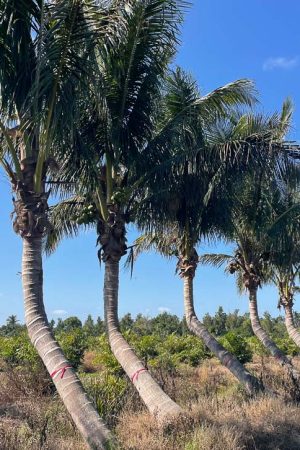
The Coconut Palm (Cocos nucifera) is one of the most iconic tropical trees in Florida, instantly recognizable for its tall, slender trunk and crown of arching fronds. Here’s what makes it a favorite in coastal landscapes:
Overview
Appearance: A single, smooth trunk topped with a canopy of long, feathery fronds. It produces coconuts—large, fibrous fruits that contain coconut water and meat.
Size: Typically grows 50–80 feet tall, with a canopy spread of about 20–25 feet.
Suitability in Florida
Climate: Thrives in USDA Zones 10–11, making it ideal for South Florida and the Florida Keys. It is not frost-tolerant, so it cannot survive in North or most of Central Florida.
Sunlight: Requires full sun for healthy growth.
Soil: Prefers well-drained sandy soil and tolerates salty conditions, making it perfect for coastal areas.
Water: Needs regular watering during establishment but is drought-tolerant once mature.
Benefits
Tropical aesthetic: Adds an unmistakable beach vibe to landscapes.
Edible fruit: Produces coconuts that can be harvested for water and meat.
Salt tolerance: Excellent for seaside planting.
Considerations
Cold sensitivity: Temperatures below 32°F can kill the tree.
Maintenance: Requires pruning of old fronds and removal of coconuts to prevent falling hazards.
Disease: Susceptible to lethal yellowing, a disease that can kill the tree; resistant varieties are recommended.
