
PINDO PALM

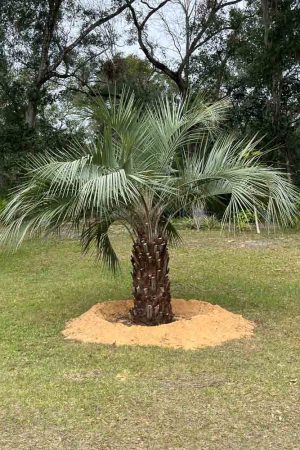
Pindo Palm (Butia capitata), also known as Jelly Palm, is a hardy, attractive palm that does very well in Florida landscapes. Here’s a detailed overview:
✅ Appearance & Characteristics
Fronds: Arching, feather-like leaves with a bluish-green to gray-green color, giving a soft, elegant look.
Trunk: Thick, stout, and textured with old leaf bases (boots); typically 12–18 inches in diameter.
Fruit: Produces clusters of orange-yellow fruits in summer, which are edible and often used to make jelly (hence the name).
Visual Appeal: Compact and ornamental—perfect for smaller spaces or as an accent plant.
✅ Size & Growth
Height: Typically 15–20 ft, sometimes up to 25 ft.
Spread: About 10–15 ft canopy.
Growth Rate: Slow—takes years to reach full size.
USDA Zones: 8A–11 (excellent for North, Central, and South Florida).
Cold Tolerance: Very hardy—down to 10°F, making it one of the most cold-tolerant palms in Florida.
✅ Care & Maintenance
Light: Full sun preferred; tolerates partial shade.
Soil: Well-drained; thrives in sandy soils common in Florida.
Water: Moderate; drought-tolerant once established.
Fertilizer: Apply palm fertilizer with micronutrients 2–3 times a year.
Pruning: Remove dead fronds and old fruit stalks; avoid over-pruning.
Spacing: Plant at least 8–10 ft from structures.
✅ Salt & Drought Tolerance
Salt: Moderately salt-tolerant—good for coastal areas but not direct beachfront.
Drought: Excellent drought resistance once established.
✅ Landscape Uses
Specimen Plant: Great focal point for gardens and entryways.
Driveway or Poolside Accent: Adds tropical charm without overwhelming the space.
Edible Fruit: Popular for making jelly, wine, and preserves.
Low Maintenance: Ideal for homeowners seeking a hardy, attractive palm.
⚠️ Things to Watch
Slow Growth: Not ideal if you need quick shade or screening.
Fruit Drop: Can be messy; attracts wildlife.
Pests/Disease: Generally pest-resistant; occasional scale or nutrient deficiencies.
